Monthly Archives: June 2023

Cranes On Film

Originally printed in Crane & Hoist Canada in September 2019

Cranes play a crucial role in many movie and television productions by assisting with camera shots and the construction of sets and other functions.

But cranes have taken a starring role in some productions as well, either as the driving force behind a frenetic chase scene or playing a functional role in a reality television series. Key players in the companies involved spoke with Crane & Hoist Canada about what was involved in those moments.

The champion of movie crane scenes

Over 40 years of operating in California, Champion Cranes president Mike Konle, has provided cranes for a bevy of movie, television and advertising scenes. Being located near Universal Studios, Warner Bros. and Sony put his business in an ideal location to provide cranes for everything from elaborate pranks on Johnny Carson’s Tonight Show to helping stars like Tom Cruise and Angelina Jolie make daring leaps from buildings.

One film stands out in particular, however, since the crane itself took centre stage. In Terminator 3: Rise of the Machines, the villainous T-X, portrayed by Kristanna Loken, hijacks a massive Terex-Demag AC 160-2 mobile crane emblazoned with the Champion Cranes name and cuts a swath of destruction through Los Angeles in pursuit of Nick Stahl’s John Connor. The chase sees the crane smash through cars and buildings, including a sequence with Arnold Schwarzenegger’s T-800 dangling from the loose boom, before being dramatically flipped over when the hook snags on a manhole cover.

Konle says that he was approached about the scene by the film’s special effects team, which was looking to do a chase scene with a vehicle larger than a fire truck. The crew fell in love with the size of the AC 160-2 and decided to use that as the basis for a model; which they would shoot to capture the chase scene. However, Konle offered them the opportunity to make the scene much more real.

“I said, ‘How would you like to have a real crane to bash and crash instead of a model?’ We sold it to the Terminator crew and we bashed it and crashed it for three months. We rolled it over, we ripped the outriggers out of it, drove it on five wheels, drove it through walls and hit police cars. It was a spectacular scene for sure.”

While almost everything in many big-budget blockbusters is CGI these days, Konle says that only part of the scene is computer-generated – the hook dropping into the manhole cover and the crane flipping over afterwards. Other than that, everything was done with practical special effects and actually smashing the crane into cars and telephone poles and everything else. The building that the boom smashes through (see photo) was constructed specifically for the film.

“It wasn’t as tough as a real building or we would never have been able to do what we did to it,” says Konle. “But all the crashing into the cop cars, and that, was all real.”

Originally the crane was going to be altered by rebuilding all the controls on the passenger side for the stunt driver, so Loken could appear to be in the driver’s seat. After Konle informed the production team that this would cost in the range of $250,000, the only alterations to the crane ended up being a roll cage and five-point harness for the stunt driver and a fake steering wheel for Loken on the “wrong side.”

“She’s driving from the wrong side of the crane,” says Konle. “But to this day, I don’t know anybody that has noticed that I didn’t tell.”

After the shoot was completed, the crane was repaired and sold to a company in the Midwest. Konle says that it is still in use to this day.

Irving Equipment and The Curse of Oak Island

Oak Island in Nova Scotia has been a source of mystery for many years, with theories of what may be hidden on the island ranging from Shakespearean manuscripts to the Ark of the Covenant. In 2014, a History network reality TV program, The Curse of Oak Island, began exploring the island and Irving Equipment have been providing support ever since.

“We’re involved in a couple of different ways,” says general manager David Irving. “Right now we’re there to assist the crew on site in their exploration efforts. Very different from the traditional projects we do where there’s a schedule and it’s all about productivity. We’re trying to accommodate them where we can – if they want to stop and dig and explore an artifact, we’re here to support them and get them access to the areas of the ground that they’re looking for.”

For a couple of early seasons of the program, the work was focused around the area known as the “Money Pit.” There, they drilled large diameter caissons and excavated so the show’s stars could sift through the contents. There, Irving Equipment utilized a couple of hundred-ton crawler cranes, including a Link-Belt.

In seasons five and six, more work was focused around the Smith’s Cove area, where a 300-ton Manitowoc 2250 crawler crane was used to drive a coffer dam into the ground. Back at the Money Pit, since a larger diameter oscillator was being used, a Liebherr HS 895 was utilized.

Irving says that while the actual operations being performed are typical for Irving Equipment’s work, it does take some adjustment for the crew.

“It’s a little bit out of the norm for our guys, you have to develop a comfort level with it,” Irving says. “There’s cameras and mics on everybody, our guys aren’t used to being in the spotlight like that. I think that’s a bit of an adjustment.”

The one technical challenge Irving identifies is simply trying to determine the right places to drill for excavations. Working alongside a seismic company the production contracted, Irving offer opinions on soil conditions and what the most effective equipment would be.

“We’ve been fortunate to develop a good relationship with the production team and that they’ve called on us now a few times,” Irving says. “I don’t know if we’ll make a habit of this, but if they’re in the neighbourhood we’re happy to offer any support that we can.”

Famous (and infamous) crane scenes in movies

The action packed crane chase in Terminator 3 was one of the most spectacular crane scenes in movies, but there have been many others over the years. Some are iconic and visually stunning. Others raise reams of logistic questions and may seem completely ridiculous.

Terminator 2: Judgement Day – Likely the most famous crane related scene in a film, though certainly more understated than many others on this list. After defeating the T-1000 by dropping it into a vat of molten metal, Arnold Schwarzenegger’s T-800 insists that he must be lowered into the same vat to prevent his parts from being salvaged, thus averting the future robot apocalypse. After a tearful good bye, the T-800 is lowered into the molten metal by way of an overhead crane.

The Adventures of Tin Tin – The mystery at the heart of this animated feature by Stephen Spielberg centres around a 17th century high-seas skirmish between Sir Francis Haddock and the dreaded pirate Red Rackham. In the film’s climax, their descendants, Captain Haddock and Sakharine, relive that battle in bombastic fashion, by engaging in a sword fight using the jibs of two massive dockside tower cranes.

The Amazing Spider-Man – When it appears that Andrew Garfield’s Spider-Man may be too injured to race to the climax and the villainous Lizard, a crane operator whose son Spidey saved earlier in the film comes to the rescue. In a stroke of luck (or perhaps plot convenience) he and his co-workers know every crane operator in New York, and they all position their cranes in such a way that Spider-Man can use them to quickly swing to the final battle.

The A-Team – This adaptation of the classic television series features many complex (even convoluted) plans, but the film’s climax may top them all. In order to outwit a crooked federal agent, the team performs a version of the classic cup-and-ball con game. However, they do so with two massive dockside tower cranes and a bevy of shipping container trailers. The crane movements utilized seem beyond the realm of possibility, particularly since there had been little indication that Bradley Cooper’s Face had any experience as a crane operator.

Skyscraper – In this action film, Dwayne “The Rock” Johnson’s Will Sawyer uses a massive tower crane to gain access to the titular skyscraper. Of note, he rocks (no pun intended) the crane’s trolley back and forth to build up momentum so that the hook will fly out and smash an opening in the building. Like the A-Team, the crane manoeuvres seem suspect, particularly since again, there is no indication that Sawyer, a former marine and hostage negotiator, has any experience in crane operation.

Casino Royale – Daniel Craig’s first outing as James Bond features a thrilling parkour-styled chase scene around a construction site, which involves much climbing and jumping from a mobile crane and two tower cranes. Most of the action is fairly credible, likely helped by the fact that Bond’s target, bomb-maker Mollaka, is portrayed by parkour legend Sébastien Foucan. The one moment that raises questions from a crane perspective, however, is when Bond climbs onto the load of pipes being carried by a crane and hits a quick release lever that drops the load and causes the hook to retract. Such a mechanism seems like it would surely violate many workplace safety protocols.
Service truck industry weathers spare parts shortage

Originally printed in Service Truck Magazine Sept. 2022

Any person working in the automotive service industry is intimately aware of the ongoing spare parts shortage at this point. Stories of vehicles being stuck in garages for weeks waiting for parts are now common as the $300 billion auto-parts and repair industry faces a growing crisis. A garage owner from Philadelphia told Bloomberg news that they refer to it as the ‘intergalactic backorder’ as though they were waiting for parts to arrive from another galaxy. And in addition to the delays, prices have also risen significantly during the same time period.
But what caused this shortage? And what have the impacts been on service and mechanic truck operators? And what can be done to return to some degree of normalcy? Service Truck Magazine spoke with a variety of industry professionals to find out.
ALL ROADS LEAD TO COVID
John Firm, mechanic operations division chair for the Automotive Service Association (ASA), says there is one root cause to all these problems – the COVID-19 pandemic. The pandemic has had an impact on almost every aspect of our lives and it has similarly impacted every step of the supply chain, from material sourcing to manufacturing to importing and exporting.
“When you have a manufacturing facility that’s building a product and it takes 25 people to build that
product from beginning to end and then you have 20 of those people go out with COVID, you have five
people in that assembly line, trying to build that product,” says Firm. “You burn those five people out
pretty quick. Then you can’t build the product.”
Such COVID-exacerbated labour shortages have been the significant driver of these issues. Last year, all the major tire manufacturers announced price increases in quick succession after rubber production stalled when tappers from Laos and Myanmar were unable to travel to Thai rubber plantations due to the COVID-19 lockdown. Whether stemming from travel restrictions or workplace absences due to sickness, the pandemic has sent shockwaves through the manufacturing sector, which then trickles down into businesses that rely on spare parts.
“A really close friend of mine is a major manufacturer of oil filters, building them for five different
brands,” says Firm. “To run a line of filters takes 15 people. When you have 10 of those people out with
COVID, you’ve got to pull five people from another line and shut that line down. You’re shutting other assembly lines down in order to make one that works. And there’s your backlog, that’s why we’re not
getting parts and inventories.”
The steps in that supply chain are also more costly now as well. Firm says that prior to COVID-19, it would cost roughly $5,000 to have a container put on a ship, brought to North America and shipped out via transport truck. Today that same process would cost roughly $20,000.
“Now you’ve got the guys who can’t afford to pay the 20 grand, or you’ve got the guys that can afford to pay it and now the price of your products will skyrocket,” says Firm. “And that’s another thing we’re seeing – $20 items we used to buy are now $40 items.”
Firm also notes many manufacturers are attempting to build their own reserves in order to protect against further shortages. If a box of 20 items used to be standard, they may now only ship 15 and keep 5 in reserve.

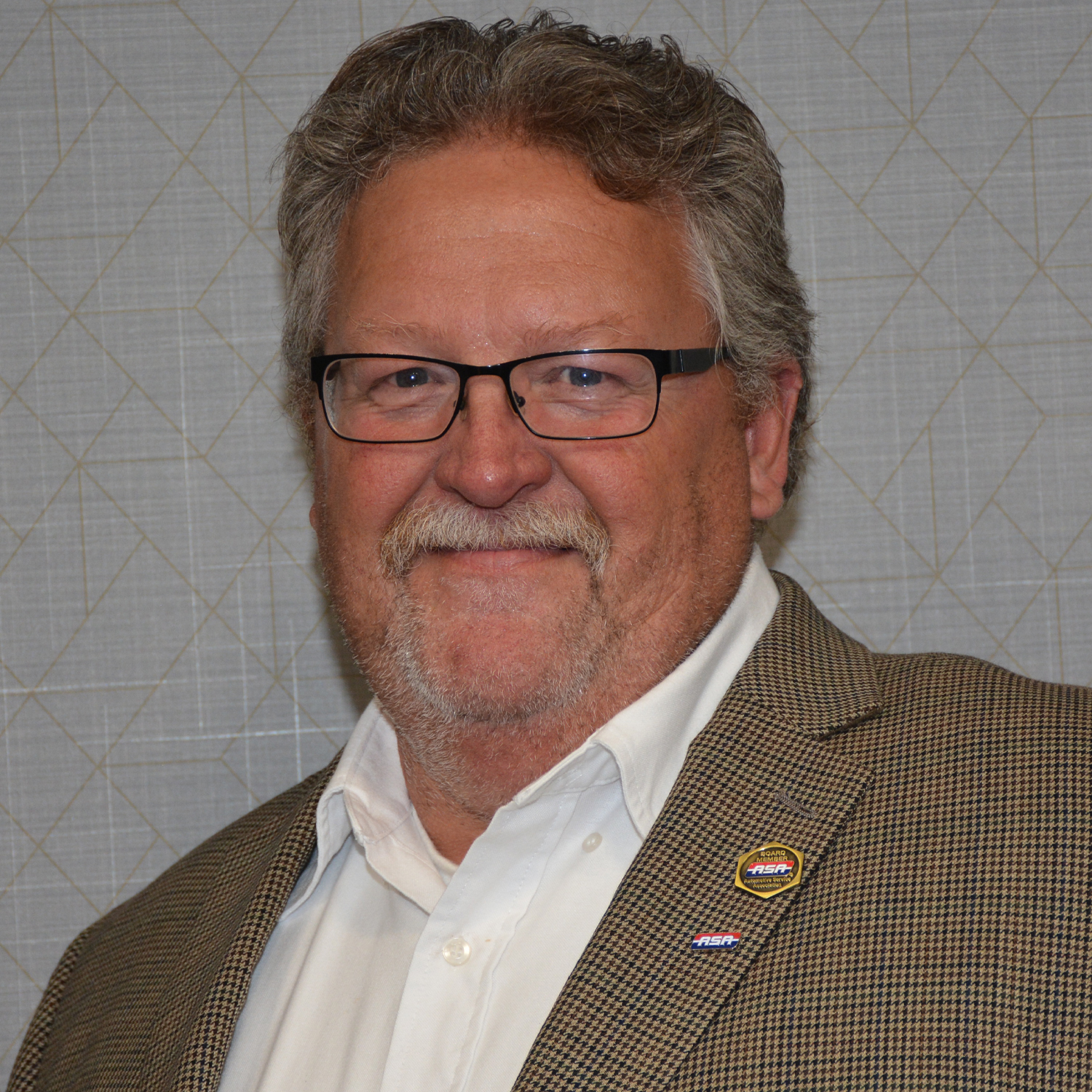
John Firm, who had been a representative of the Automotive Service Association at the time of this article’s original publication.

WHAT HAS BEEN AFFECTED
Computer chips are commonly cited as being harder to source and more expensive to obtain. Firm says there are plans for a computer chip factory in Detroit, Michigan, but the facility is not yet complete. “Manufacturers were paying $3 per chip before COVID-19,” says Firm. “When the manufacturers quit building cars, the guy building those chips has to find somebody to buy them. So what went hot? TVs, computers, anything with entertainment. And they realized they could sell their chips for $12 and $20 for computers and TVs.”
Marc Karon, president of Total Truck Parts, Inc. and a member of the board of directors of the Commercial Vehicle Solutions Network, says that his company has experienced challenges in sourcing sensors and other electrical parts. He also noted that he expects Freon to become scarcer, though he attributes that to environmental activism.
“Another area where we are seeing critical shortages is in the area of engine parts,” says Karon. “We repair engines in our shops and we sometimes have to hold up a job waiting for a critical component. We have also seen shortages of media which affects filters. High quality steel affects bearings. And the one area that affects all of them is labor shortages. Many suppliers tell me that they have the subcomponents of the parts we need but they cannot get enough people to staff assembly lines.”
Nate McMurtrey, owner and operator of Offroad Wrench, says that the parts shortage cost him an
engine in one of his service trucks this year. His 855 Cummins needed injector sleeves and valves
replaced but neither of his local machine shops had access to the parts. He was eventually able to
source injector sleeves but not valves and ended up giving up and swapping out the entire engine.
“It devastated the start of 2022 for me,” says McMurtrey. “They told me I’d be looking at two to three weeks wait, so we made the decision to swap an engine out and we ended up having some other parts availability issues as we were doing the engine swap. So the total downtime was closer to five weeks of lost billable hours, and that’s just on my truck, that’s not even the customer stuff.” McMurtrey also had issues with a logging yarder. He needed cylinders for the guideline drums and it took two and a half months to get replacements. He’s also experienced a variety of other parts being unavailable with no set date for when they’ll show up.

“There’s obviously the used parts route that we could go with but the customers and the fleets that I
operate with prefer not to use used parts,” says McMurtrey. “They prefer preventative maintenance
ahead of time. And I operate my own stuff the same way. But I still ended up putting a used engine in.”
McMurtrey notes that part availabilities in some cases have begun to improve, however the high
demand has also led to price increases.
“The stuff that is available is astronomically expensive at this point,” says McMurtrey. “And the stuff
that’s not available, we don’t know when it will be available.”

INDUSTRY RESPONSES

Like many automotive and machine service operators, McMurtrey has responded to the shortages by stockpiling parts in hopes of being prepared for when a need arises. He operates with 3 fleets on a regular or semi-regular basis, so fleet management is key to his business. He’s currently looking for used engines that can be rebuilt and stored for when they’re ready to use.
“We are collecting major components for the equipment and looking at what the value of having that component in our stock is,” says McMurtrey. “Because relying on parts availability, just calling your dealer and your parts houses has gone away.”
One of McMurtrey’s clients has three or four machines with identical undercarriages in use and they’ve purchased an entire track rail assembly, rollers, idlers and sprockets, which are all waiting on the ground in the case of any failures that need to be dealt with. Another fleet he works with placed orders for two brand new undercarriages with the OEM at the end of 2021 and they have not yet arrived.
“We’ve also had some aftermarket undercarriages and those companies have gone bankrupt and left us with undercarriage we can’t service,” says McMurtrey. “So last year we made the decision to stay with our local dealers and purchase OEM undercarriage for these fleets. That way we have local support, local pressure and buying power.”
In addition to engaging with this topic at a high level with the ASA, Firm has also felt the impacts firsthand as the owner of Firm Automotive. He says that when a vehicle comes into his shop with a component failure, they often have to let the customer know that the part is on backorder with no estimated time of arrival (ETA).
“Or, we have to let them know that you can’t believe the ETA,” says Firm. “A lot of parts that we get from the manufacturer say they’re going to build it, and they’re going to deliver it in a week from now or two weeks from now. But when that date comes around they’ve issued another date. We’ve seen that a bunch of times.”
Not all businesses struggled due to the parts shortage, however, as some were able to position themselves to take advantage. Karon says that Total Truck Parts benefitted significantly, as they had anticipated there would be supply interruptions after the initial COVID-19 lockdowns and that they would cause price increases.
“We did a lot of advanced purchasing and buying in extended quantities,” says Karon. “When the price increases came, we were able to sell our extra inventory at the new prices which resulted in significant profit gains. Although there have been some improvements in the supply chain delays, we are still seeing shortages of key parts and we are stockpiling these. In some cases, we are stocking more than a year’s supply.”
Karon also says that parts shortages have made his company more creative in how they service their customers. When a truck is down that typically generates thousands of dollars a day in revenue because of a $50 part, customers are less concerned about the cost of the part than when they will get it.

“As a result, we do a lot of sourcing away from our major supplier when they cannot meet our needs,”
says Karon. “This has been taxing on our sales team, but they are very effective and work hard to take
care of the customer. Unfortunately, suppliers have not stepped up and set up too many rules to make
emergency sourcing difficult. The result is they lose business.”
Another trend he has seen is suppliers increasing their freight minimums, which has caused Total Truck Parts to move to other suppliers. While Karon sympathizes with the suppliers having to bear the increased costs of freight, he notes a better approach would be to limit the number of orders per week.

“Increasing freight minimums do no lower costs,” says Karon. “All it does is drive business away. How does that make a company more money? We have successfully negotiated shipping programs with many of our suppliers and they are enjoying significant growth in our purchases.”
Karon feels that companies with the ability (read: capital) to do so, should be planning ahead and stocking parts that may be in short supply in the future. With Total Truck Parts being based in Florida, they are aware of the possibility of disruptions stemming from hurricanes, so they have detailed mitigation plans. The parts shortage is another, equally predictable circumstance in his view.
“We pay attention to what is going on that might affect availability,” says Karon. “The environmental movement is pushing to shut down R134 Freon availability. Thus, we stock up just in case. When we see steel prices increasing like they did last summer, we purchased drums. At one point, we had a year’s supply in stock. Now the availability is better, so we have let the stocks run down some. Manufacturers use ‘just in time’ inventory which will not allow for any interruptions in supply. We think that is the wrong approach. When commodity prices are rising faster than the cost of capital, buying inventory is a great place to park your cash.”

HOW TO MOVE FORWARD

Understanding how these shortages developed and the impacts that they have had are only useful as a means of determining how to move forward. Returning to ‘normal’ may be impossible, but we may be able to achieve a new ‘normal.’ Given the logistic complexities that have been impacted by the COVID- 19 pandemic, Firm’s biggest suggestion is to simplify supply chains by bringing manufacturing back to domestic soil and reducing outsourcing and importing.
“I think by bringing back manufacturing here, it will open up more jobs as far as the trucking industry and delivery,” says Firm. “If we brought manufacturing back to the North American continent, we could be stronger, and we could be outsourcing the stuff to those countries. They’d like American products a whole lot better than what we like from China.”
However, that is not nearly as easily done as it is said. Manufacturers have traditionally enjoyed outsourcing overseas for cheaper labour costs. And furthermore, truly learning to live with COVID-19 is not just a matter of dealing with having more people out sick, but making infrastructure investments to mitigate impacts, such as outfitting facilities with high end ventilation systems. These are significant investments that manufacturers would have to grapple with. Are they willing?
“There’s gonna to be some changes to get there,” acknowledges Firm. “The minimum wage, they’re increasing that, that’s going to help as far as manufacturing, now people can make a living doing that. But we still have to sell that product at an increased price. And we have to get North America to bite on a better quality product for a little bit more money. And we have to deliver that better quality product. There’s a well known saying right now, ‘don’t buy anything that was made during COVID that’s an RV.’ Because they put them together with half the staff and they have a lot of problems. We’ve got to say, no matter what it is, we still do the best we can do and deliver a top quality product. We don’t have to rely on an imported product.”
Representatives of the National Association of Manufacturers did not respond to requests for comment on this topic, however, a spokesperson for their Canadian counterparts, the Canadian Manufacturers & Exporters, offered the following comment.
“The shortage comes from manufacturers’ inability to source these parts from abroad because of the fracture of long, complex supply chains, and a lack of domestic alternatives. This in turn leads to our calls for two big things: 1. Government needs to properly scope out and map Canada’s industrial capacity, and 2. Once that is done, we can target vulnerable areas in the supply chains, but overall help manufacturers invest in growing their businesses.”
Karon suggests another approach to increase productivity in the workforce would be to lower the age requirement for obtaining a commercial driver’s license (CDL) to 18 and to make them easier to obtain. “We just had to pay $2800 to get one of our employees a CDL,” he says. “How many 18-year old’s have $2800?”
He would also like to see the reinstatement of investment tax credits that existed in the 1970s, programs like Work for Welfare, a review of regulations that discourage investing in US-based manufacturing as opposed to southeast Asia and creating a $2000 a year tax credit for 18-20 year old’s who go to work in a brick and mortar business or factory.
McMurtrey says that he would like to see more unity on behalf of the industry at large to put pressure on manufacturers. He describes himself as an OEM advocate, which perhaps makes him an oddity in the independent service world. But through his preference for OEMs, he believes he has some pressure he can place on dealers to get things accomplished.
“Buying power comes from unity and if all we’re doing is searching for the cheapest price anywhere, you don’t get any kind of power, your buying power diminishes,” says McMurtrey. “If you’re the guy that is always just searching for the best price, you’re going to get left in the weeds. If you are building relationships within the industry and strengthening those relations, by combining your buying power you’re going to do much better.”
He adds that young independent operators getting into the industry need to ensure that while they are building their relationships with their customers they should also be building their relationships with the vendors.

“In the next couple of years, that’s going to keep an outfit with work in front of them,” says McMurtrey. “I do my best to save my customers money by building relationship and limiting the number of vendors we have. We’re going back to trying to get as many things as possible from one vendor instead of just price shopping because it takes so much time. We’re willing to pay a little bit of extra money to have somebody else actually do all that searching for us. It’s not all about just making money for yourself – it’s about keeping the end user, your customer, up and running. And if you stay focused on that, and build the relationships, the money comes after that.”