(Originally printed in the July/August 2013 issue of Aquaculture North America)
One of the most pressing concerns facing the world today is the viability of traditional food sources in the face of a steadily rising population. While this may mean the collapse of some industries, it will create opportunity. New industries and innovations to existing methods will be needed, which is a potential economic windfall.
With many undersold health benefits and much untapped potential, seafood has an opportunity to become a much more important part of a typical western diet. Dr. Barry Costa-Pierce, a researcher with the University of New England says that aquaculture, in particular, has the potential to play a key role in this brave new world, but it will require some revolutionary thinking.
“The dream of Jacques Cousteau that we were going to farm the oceans sustainably to provide nutrient-dense foods essential for human health and wellness was a good idea then and it’s a good idea for our future,” Dr. Costa-Pierce told an audience at the Bay of Fundy Seafood Festival’s Seafood Forum in June. “In a world of about nine to ten billion people, we’re going to have to find a way to sustainably intensify aquaculture in the near shore.”
One of the major roadblocks to progress, as he sees it, is the certification process, which can be a nightmare for potential aquaculturists.
Search Google for “aquaculture certification.” The results are endless, and overlapping. Hundreds of options with little indication as to which certifications are worth more than others or which is the most authoritative. What’s more, many offer certifications that are based on extremely similar criteria – fundamentally identical other than the names. And in an age when people are increasingly concerned with what happens before their food reaches their plate, certification is key to consumer confidence.
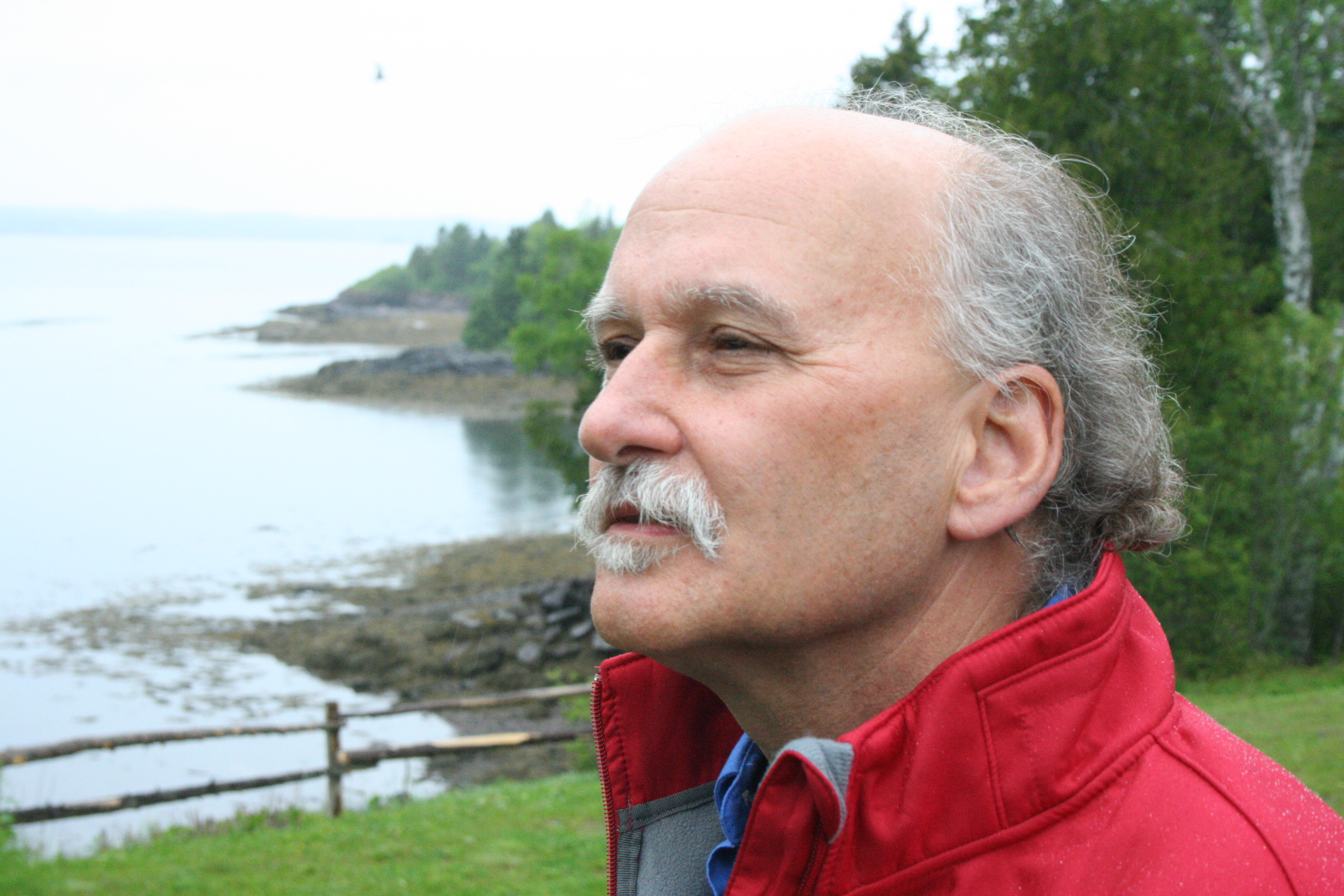 Dr. Costa-Pierce identifies several problems with the certification process as it currently stands. Nongovernmental organizations set the agenda, creating confusion due to their number and crossover. Certification also has high and recurring costs and favours developed countries instead of acting as a way to help the underdeveloped. Finally, there’s the fact that the benefits of certification (including premiums, enhanced credibility or market access) are often not passed down – instead they linger and build up in the supply chain.
Dr. Costa-Pierce’s suggestion is the creation of “centers of innovation” – to bring together recreational and commercial fisheries representatives, fish and shellfish farmers, environmental groups, academics, riparian land owners, coastal land owners and state regulators to determine best practices from the ground up. Those with hands-on experience and those who live with aquaculture at a direct local level must be involved in the process from the start, not simply “consulted” after the fact.
“That’s what I’m calling for – the next generation of social processes – to work together and begin to solve some of these issues as it relates to the expansion of aquaculture.”
What about the regulators? While one might expect some resistance from governments who could view this as a loss of control, Dr. Costa-Pierce says that they are in fact specifically looking for this sort of social process.
“I think we need to appreciate where they’re at right now. The regulators are under great, great pressure financially. There’s just not a lot of coverage of the coast. There’s a large retirement bubble. They’re actually reaching out to us more than ever before rather than thinking that it’s top-down, that they’re in control and everybody must fall in line.”
It’s not about regulatory schemes, Dr. Costa-Pierce asserts. It’s about creating a new social contract – an understanding that those working in production are not inherently irresponsible and in need of regulation and intervention. He cites the work of Elinor Ostrom, 2009 Nobel Laureate in Economic Sciences. Ostrom argued that the traditional view of “the tragedy of the commons” – the idea that, left to their own devices, people will use up precious resources in pursuit of their own gain – is false.
“Elinor showed that, if we had sophisticated participatory processes that included people as part of the decision making, that we could develop local knowledge, cooperation and enlightened self-interest and that would be more effective than this entire generation of regulations that we’ve developed.”
Another key piece of the puzzle is enhancing aquaculture’s social standing with the general public. Conflicts with fishermen, lobstermen and people concerned about environmental damage and visual pollution have left aquaculture with a reputation of being possibly too controversial. Dr. Costa-Pierce suggests starting the work of improving that reputation by promoting what he calls “low-hanging fruit” – aquaculture activities that have greater social acceptance than finfish in many North American coastal areas. These activities would act as effective first steps in the greater promotion of aquaculture as a whole.
Specifically, Dr. Costa-Pierce details 17 seaweed farms in Maine which produce food and other products, and how the science may soon be there to grow seaweed in shellfish closed areas of the ocean. He explains how aquaculture supported rising numbers of Atlantic Sturgeon and Shortnose Sturgeon. He refers to changing attitudes and technological advances which have led to increased development of shellfish aquaculture in jurisdictions where user conflicts were thought too deep-seated to be overcome. He also ponders the possibilities for controversial species such as eels.
“Right now, the state of Maine is exporting these elvers for aquaculture in ponds in China. Can’t we keep a portion of these for restoration fisheries and to take a new, fresh look at eel aquaculture along our coasts?”
The other key aspect to repairing aquaculture’s reputation, he says, will be breaking down the artificial divisions that exist between fisheries and aquaculture. These industries have long had an adversarial relationship, he says, but it doesn’t have to be that way – they can accomplish great things by working together. Dr. Costa-Pierce cites the example of the Eliminator net, which was the product of scientists from both fields. The Eliminator catches haddock while allowing cod to escape therefore drastically reducing bycatch. The net was such a revelation within ocean trawling that it won the World Wildlife Fund’s Smart Gear prize in 2007.
“The transition between fishing communities and aquaculture is blurring more and more. For many, many years we talked about conflicts and now we’re talking about livelihoods.”
Dr. Costa-Pierce’s recommendations are grounded in the principles of the Food and Agriculture Organization of the United Nations’ Ecosystems Approach to Aquaculture. The strategy focuses on “the integration of aquaculture within the wider ecosystem such that it promotes sustainable development, equity, and resilience of interlinked social-ecological systems.” While many of his other recommendations deal with the enhancing seafood supplies as a whole – restoring Marine Protected Areas, reducing bycatch and increasing both processing efficiencies and the usage of underutilized fish species – the revolution of aquaculture itself still has the most exciting possibilities for the future.
 mattjoneswrites